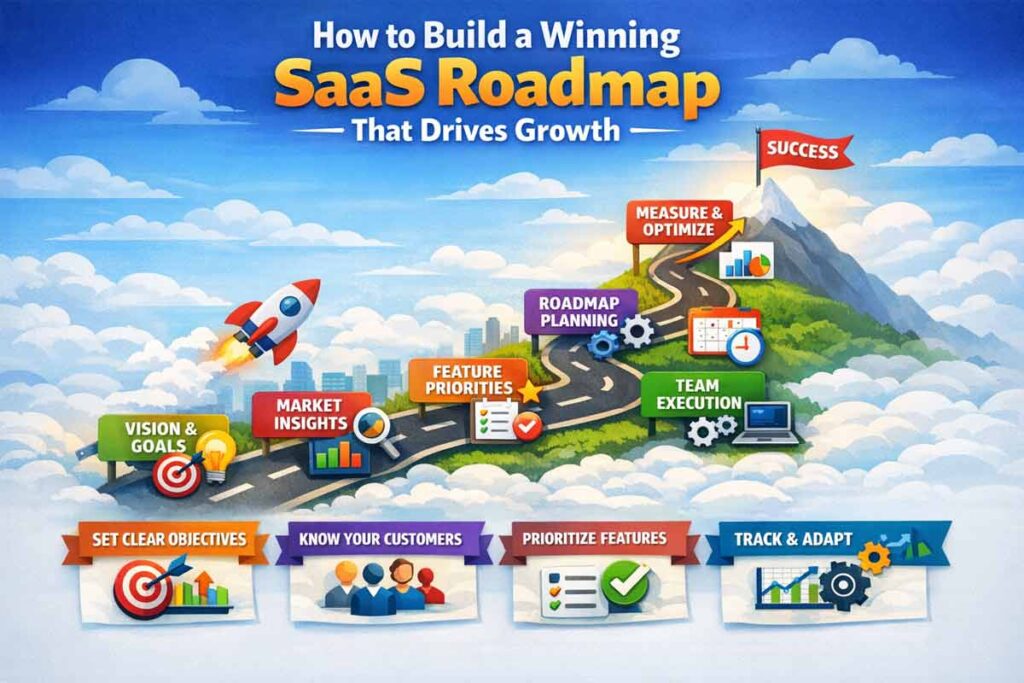
Inside the competitive Software as a Service landscape, validation is the most critical step between an idea and a scalable product. We depend on data-driven validation techniques to confirm demand, reduce unnecessary development costs, and accelerate market entry.
This guide delivers proven SaaS product validation methods to immediately test ideas, measure demand, and refine product-market fit.
Identify a Real Problem Worth Solving
Successful SaaS validation begins with problem identification. We uncover high-impact, recurring problems users are actively trying to solve.
How We Validate the Problem
- Analyze customer complaints on forums, social media, and feedback platforms.
- Study competitors’ weaknesses and gaps
- Conduct one-on-one interviews with potential users.
- Identify inefficient or costly workflows.
We ensure the problem is:
- Frequent
- Painful
- Costly to ignore
Define a Clear Target Audience
Without a clear audience, validation is vague. We define niche user personas to sharpen our process.
Key Elements We Focus On
- Industry and job role
- Pain points and frustrations
- Budget and purchasing behavior
- Current tools being used
This lucidity enables us to run laser-focused validation experiments that yield useful insights.
Create a High-Converting Landing Page
A landing page is a quick way to gauge interest before building the product.
What We Include
- Compelling headline that communicates value instantly
- Clear description of the solution
- Strong call-to-action (CTA) such as:
- “Join the Waitlist”
- “Get Early Access”
- “Start Free Trial”
Verification Metrics
- Conversion rate
- Email signups
- Time spent on the page
A high conversion rate shows strong user interest and demand.
Run Targeted Paid Advertising Campaigns
We use paid campaigns to validate demand at scale.
Platforms We Leverage
- Google Ads
- Facebook & Instagram Ads
- LinkedIn Ads (for B2B SaaS)
What We Measure
- Cost per click (CPC)
- Cost per lead (CPL)
- Conversion rates
If users click and sign up, market interest is confirmed.
Build a Minimum Viable Product (MVP)
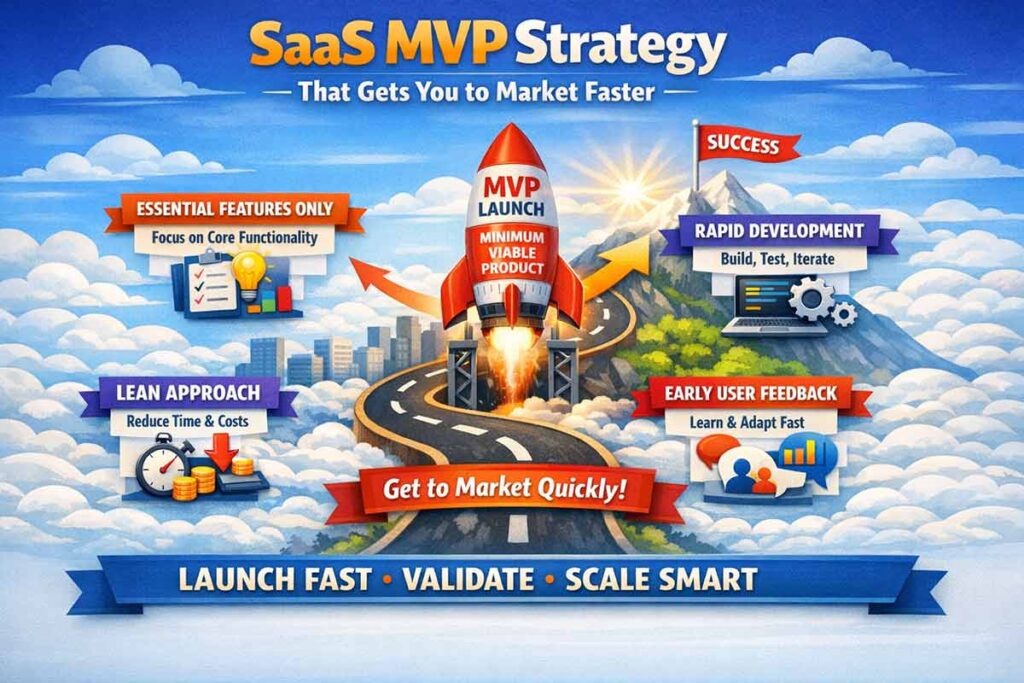
An MVP lets us validate the concept with minimal development.
Characteristics of an Effective MVP
- Solves one core problem only
- Includes crucial features
- Built quickly using no-code or low-code tools
We focus on:
- Speed instead of perfection
- Functionality over design
Validation Indicators
- User involvement
- Retention rate
- Feedback quality
Pre-Sell Your SaaS Product
Pre-selling strongly validates with real monetary commitment.
How We Execute Pre-Sales
- Offer early access pricing.
- Provide exclusive benefits to early adopters.
- Use scarcity (limited spots or time-based offers)
If users are willing to pay upfront, we confirm:
- Strong product-market fit
- High perceived value
Conduct Customer Interviews and Surveys
Direct feedback provides qualitative insights that analytics can’t capture.
Effective Validation Questions
- What is your biggest challenge in this area?
- How are you currently solving it?
- What would an ideal solution look like?
- Would you pay for this solution?
We analyze response patterns to improve our product direction.
Leverage Beta Testing for Real-Life Feedback
Beta testing validates the product under real-world conditions.
Steps We Follow
- Invite early adopters
- Provide access to the MVP.
- Collect structured feedback
Key Metrics
- Feature usage
- Drop-off points
- Customer satisfaction
This phase removes friction and optimizes usability for launch.
Analyze Competitor Demand Signals
Competitors supply valuable validation data when assessed correctly.
What We Examine
- Pricing models
- Customer reviews
- Feature gaps
- Brand positioning
We identify:
- What users love
- What users complain about
This enables us to position our SaaS as the top alternative.
Use Smoke Tests to Validate Ideas Quickly
A smoke test simulates an offering without building it.
Examples of Smoke Tests
- “Buy Now” button leading to a “Coming Soon” page.
- Feature announcements without backend implementation
- Fake onboarding flows
Purpose
Measure user intent before investing in full development.
Measure Engagement and Behavioral Metrics
Validation requires tracking real user behavior.
Critical Metrics We Monitor
- Activation rate
- Daily/Monthly active users
- Churn rate
- Feature adoption
Behavioral data shows whether users:
- Understand the product
- Find value in it
- Continue using it
Validate Pricing Early
Pricing is part of validation, not an afterthought.
Methods We Use
- A/B testing pricing tiers
- Offering different plans
- Testing willingness to pay
We determine:
- Optimal price point
- Revenue potential
- Customer expectations
Build a Waitlist to Measure Demand
A waitlist indicates demand and is a potential user base.
Strategies to Grow a Waitlist
- Content marketing
- Social media campaigns
- Referral incentives
A growing waitlist signals:
- Strong interest
- Viral potential
- Market readiness
Use Content Marketing for Organic Validation
Content validates demand without direct selling.
Content Types We Create
- Blog posts targeting pain points
- Educational guides
- Case studies
Validation Measures
- Organic traffic
- Engagement rates
- Lead generation
High engagement confirms users are seeking our solutions.
Test Retention Prior to Scaling
Acquisition without retention means failure. We validate continued product use over time.
Retention Indicators
- Repeat usage
- Subscription renewals
- Reduced churn
Retention proves:
- Long-term value
- Long-term growth potential
Conclusion: SaaS Product Validation
SaaS success is built on validated decisions. Using these methods—landing pages, MVPs, pre-sales, interviews, and analytics—we eliminate risk and accelerate growth.
Each validated insight moves us nearer to a scalable, profitable SaaS product that meets demand and delivers value.