
Creating a successful SaaS product isn’t simply about building features—it’s about building the right features at the right time. That’s where a well-organized SaaS roadmap comes in. A powerful roadmap unites your team, keeps development focused, and ensures your product evolves to spur growth, retention, and revenue.
Let’s commence by exploring what a SaaS roadmap really is and why it’s essential for growth.
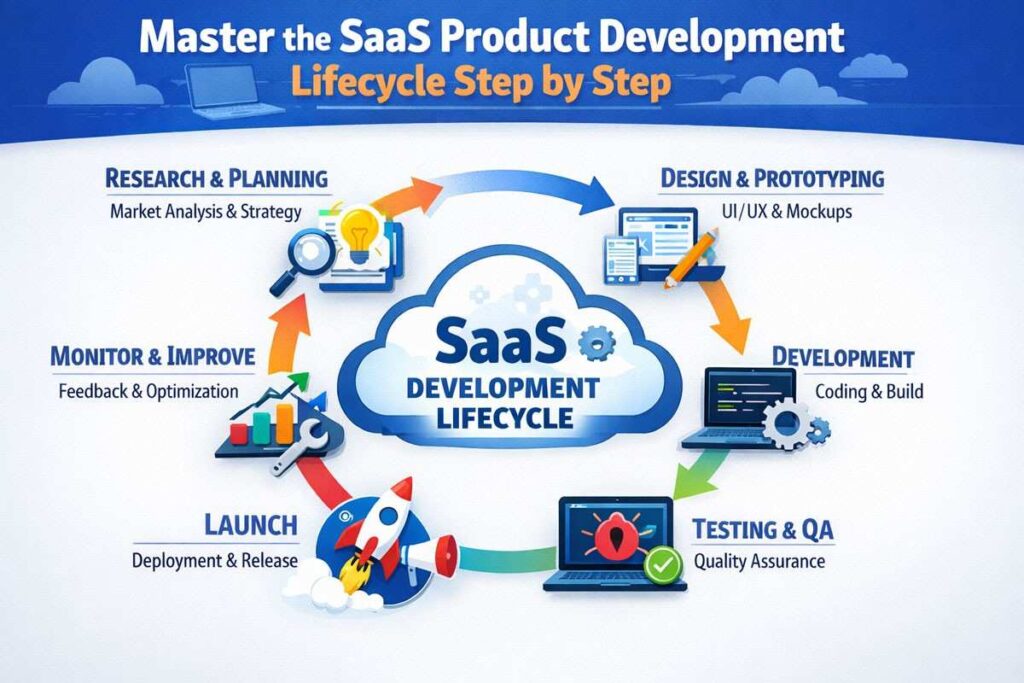
What is a SaaS Roadmap?
A SaaS roadmap is a strategic plan that outlines:
- Product vision
- Key features and updates
- Development timelines
- Business goals
It functions as a blueprint for your product’s future, helping teams keep aligned as they adjust to market changes.
Why a SaaS Roadmap is Critical for Growth
Without a roadmap, SaaS development becomes chaotic. A solid roadmap helps you:
- Prioritize high-impact features
- Align product with company targets.
- Improve team productivity
- Boost customer satisfaction
- Reduce wasted development time.
In short, a roadmap transforms random updates into a growth engine.
Step 1: Define Your Product Vision
Start with clear intent.
Ask yourself:
- What problem does your SaaS solve?
- Who is your ideal customer?
- What makes your product unique?
Your roadmap should always support your long-term vision, not just short-term wins.
Step 2: Understand Your Target Users
A roadmap without user insights is guesswork.
Gather Customer Data
Use:
- Surveys
- Interviews
- User behavior analytics
Recognize Pain Points
Focus on:
- Friction during onboarding
- Missing features
- Usability issues
The better you know your users, the stronger your roadmap.
Step 3: Set Clear Business Goals
Your roadmap should support verifiable outcomes.
Examples include:
- Increase Monthly Recurring Revenue (MRR)
- Reduce churn rate
- Improve customer retention
- Expand into new markets.
Tie every feature or update to a business objective.
Step 4: Rank Features Strategically
Not all features carry equal significance.
Use Prioritization Frameworks
Popular methods include:
- RICE (Reach, Impact, Confidence, Effort)
- MoSCoW (Must-have, Should-have, Could-have, Won’t-have)
Focus on Value
Ask:
- Will this feature solve a major problem?
- Will it improve user experience?
- Will it drive revenue or retention?
Avoid feature overload—focus on impact, not quantity.
Step 5: Break Down Your Roadmap into Phases
Organize your roadmap into clear stages:
Short-Term (0–3 Months)
- Bug fixes
- Core feature improvements
- Performance optimization
Mid-Term (3–6 Months)
- New feature development
- UX enhancements
- Integrations
Long-Term (6–12 Months)
- Advanced features
- AI capabilities
- Market growth
This stepwise approach keeps your roadmap clear and achievable.
Step 6: Choose the Right Roadmap Format
Your roadmap must be clear and easy to follow.
Common Formats
- Timeline-based roadmap
- Kanban-style roadmap
- Theme-based roadmap
Pick a format that fits your team’s workflow and style.
Step 7: Align Teams and Stakeholders
A roadmap only works if everyone agrees.
Key Groups to Align
- Product team
- Development team
- Marketing team
- Sales team
Guarantee transparency so everyone understands:
- What’s being built
- Why it matters
- When it’s coming
Step 8: Be Agile and Flexible
SaaS markets change fast.
Adapt to Feedback
Continuously update your roadmap based on:
- User feedback
- Market patterns
- Performance data
Avoid Rigidity
Your roadmap is a guide, not a contract.
Flexibility guarantees you stay current and competitive.
Step 9: Communicate Your Roadmap Clearly
Clear communication creates trust.
Internal Communication
- Regular team updates
- Sprint reviews
- Progress assessment
External Communication
- Share major updates with users.
- Announce new features
- Build anticipation
Transparency keeps users invested in your product.
Step 10: Measure Success and Optimize
A roadmap without measurement is incomplete.
Follow Key Metrics
- Feature adoption rate
- End-user engagement
- Churn rate
- Revenue growth
Optimize Continuously
- Double down on what works.
- Improve underperforming features
- Remove unnecessary complexity
Data-informed decisions fuel long-term growth.
Common Mistakes to Avoid
Even experienced teams make these errors:
- Overloading the roadmap with too many features
- Ignoring user feedback
- Lack of clear priorities
- Poor communication across teams
- Sticking to old-fashioned plans
Avoiding these mistakes keeps your roadmap actionable.
Best Practices for a High-Performing SaaS Roadmap
To build a roadmap that truly drives growth:
- Keep it user-focused
- Prioritize outcomes over outputs.
- Review and update regularly.
- Use data to guide decisions.
- Preserve simplicity and clarity.
A great roadmap is strategic and focused, not complex.
Conclusion
Building a winning SaaS roadmap is more than planning features—it createsa clear path to growth. Through aligning product vision with user requirements and business goals, prioritizing, and keeping flexible, you turn your roadmap into an effective tool for success.
The best SaaS companies build intentional, data-driven roadmaps that evolve with their users. Follow these steps to create a plan that directs development and drives lasting growth and profitability.