
Artificial intelligence has transformed from a novelty tool into a scalable business engine. Across industries, entrepreneurs are now using AI systems to automate operations, launch digital products, generate passive income, and create high-margin businesses with minimal overhead. Yet most experiments fail because users approach AI as a shortcut instead of a strategic multiplier.
We tested what happens when AI is given one objective: generate revenue. The results revealed a clear pattern. AI does not magically create money. It accelerates systems that already have direction, structure, and market demand.
This guide breaks down the exact frameworks, monetization models, workflows, and AI-powered business systems that are generating real income in 2026.
The Real Question: Can AI Actually Make Money?

Yes — but not in the way most people expect.
AI succeeds when it is used to:
- Automate repetitive labor
- Scale content production
- Analyze consumer behavior
- Build digital assets rapidly
- Reduce operational costs
- Improve conversion rates
- Generate personalized marketing
- Accelerate software development
AI fails when users rely on it for:
- Instant wealth
- Zero-effort businesses
- Fully autonomous decision-making
- Low-quality spam content
- Unvalidated business ideas
The difference between profitable AI projects and failed experiments is execution quality.
How AI-Powered Businesses Generate Revenue
Modern AI monetization typically falls into five profitable categories.
| AI Business Model | Revenue Potential | Startup Cost | Scalability |
|---|---|---|---|
| AI Content Websites | High | Low | Very High |
| AI SaaS Products | Very High | Medium | Massive |
| AI Automation Agencies | High | Low | High |
| AI Ecommerce Optimization | Medium to High | Medium | High |
| AI Consulting Services | High | Low | Medium |
Each model uses AI differently, but all depend on solving a measurable business problem.
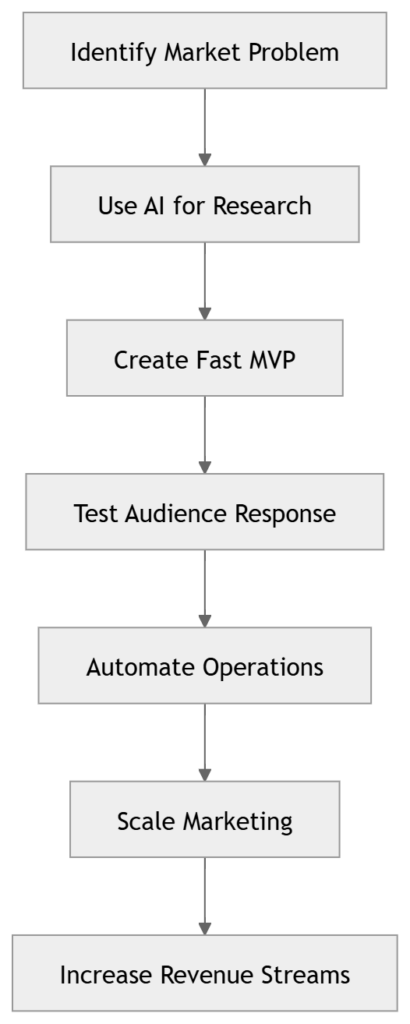
The AI Wealth Framework
The most effective AI businesses follow a repeatable structure.
AI Content Websites: The Fastest Entry Point
AI-powered content businesses remain one of the easiest ways to generate income online.
The model works because AI dramatically reduces the cost and time required to publish high-quality articles, guides, tutorials, and comparison pages.
High-Performing AI Content Niches
Some industries outperform others because of search demand and advertiser competition.
Most Profitable Niches
- Software reviews
- Finance
- Insurance
- Packaging and manufacturing
- SaaS comparisons
- AI tools
- Health supplements
- Digital marketing
- Ecommerce
- Cybersecurity
These niches often produce higher affiliate commissions and advertising revenue.
How AI Content Sites Actually Rank
Google rewards expertise, topical authority, user engagement, and content depth. Thin AI-generated articles rarely survive long-term.
Winning AI-assisted websites use this framework:
1. Human-Led Strategy
AI accelerates production, but humans control:
- Keyword targeting
- Search intent alignment
- Brand positioning
- Original insights
- User experience
2. Topical Clustering
Instead of isolated posts, successful sites build complete topic ecosystems.
Example:
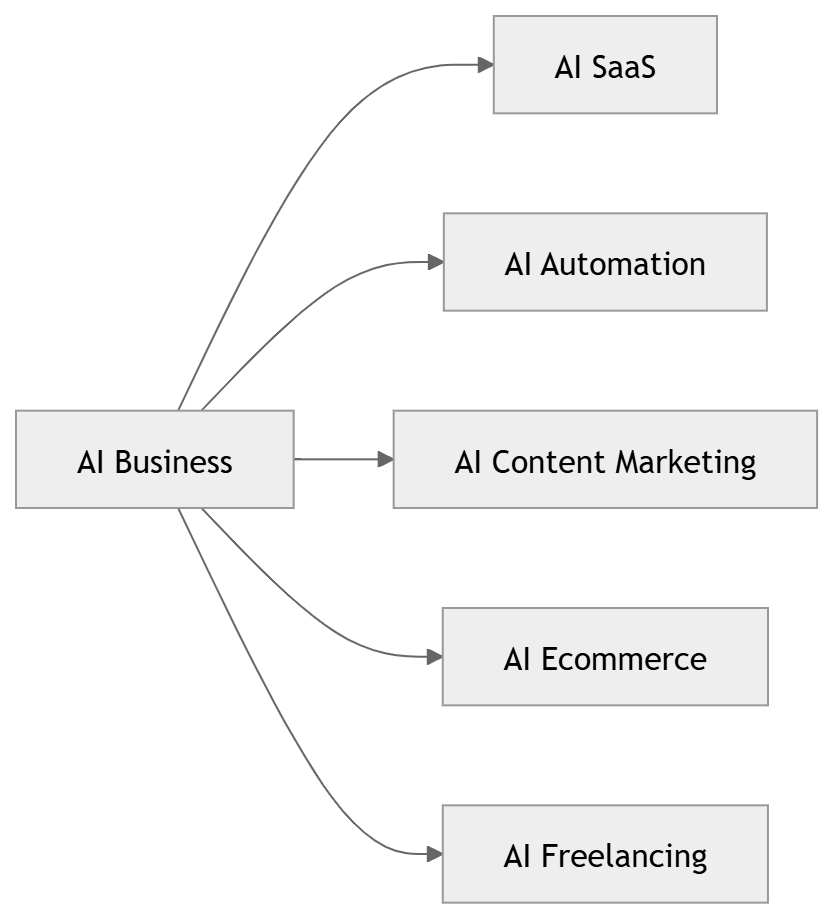
This strengthens semantic relevance and authority.
3. Conversion Optimization
Traffic without monetization is meaningless.
High-performing AI content businesses integrate:
- Lead magnets
- Product recommendations
- Email capture systems
- Affiliate funnels
- Consultation booking systems
Building an AI SaaS Business
The most profitable AI companies are not content publishers. They are infrastructure providers.
AI SaaS businesses solve expensive operational problems using automation and predictive intelligence.
Why AI SaaS Dominates Revenue Growth
AI SaaS combines:
- Recurring subscriptions
- High margins
- Automation
- Scalability
- Predictable cash flow
This creates exponential growth potential.
Best AI SaaS Ideas in 2026
AI Customer Support Systems
Businesses want 24/7 automated support with human-like responses.
Features That Sell
- Live AI chat
- Ticket summarization
- CRM integration
- Multilingual support
- Sentiment analysis
AI Sales Assistants
AI now assists with:
- Lead scoring
- Outreach personalization
- Follow-up automation
- Pipeline analysis
- Forecasting
Companies pay premium subscription fees for measurable sales improvements.
AI Packaging Design Platforms
Manufacturers increasingly use AI to:
- Generate box mockups
- Optimize packaging dimensions
- Predict material costs
- Create print-ready designs
- Improve branding consistency
This market is expanding rapidly because ecommerce businesses require scalable packaging solutions.
AI Automation Agencies
One of the fastest-growing business models involves building AI systems for other companies.
Instead of selling software, agencies sell implementation.
High-Demand Automation Services
Lead Generation Automation
AI tools scrape, enrich, and qualify leads automatically.
AI Email Marketing
Businesses use AI to:
- Generate subject lines
- Personalize campaigns
- Predict open rates
- Optimize timing
Workflow Automation
Companies increasingly automate:
- Invoice generation
- CRM updates
- Client onboarding
- Reporting
- Scheduling
This dramatically reduces operational costs.
The Rise of AI-Powered Ecommerce
Ecommerce brands are aggressively adopting AI because margins are shrinking and competition is increasing.
AI improves profitability through:
- Product recommendation engines
- Dynamic pricing
- Inventory forecasting
- AI-generated product descriptions
- Conversion optimization
AI Product Description Systems
AI-generated product copy has become a major competitive advantage.
Effective AI descriptions:
- Increase search visibility
- Improve conversion rates
- Reduce bounce rates
- Enhance readability
- Match user intent
The highest-converting descriptions combine SEO structure with persuasive psychology.
How AI Improves SEO Performance
Modern AI SEO systems now assist with:
- Keyword clustering
- SERP analysis
- Internal linking
- Search intent matching
- Schema generation
- Content gap analysis
However, automation alone is insufficient.
Successful SEO strategies require:
- Original expertise
- First-hand insights
- Statistical analysis
- User-focused formatting
- Brand trust
The Biggest AI Monetization Mistakes
Most AI projects fail because users ignore fundamental business principles.
Mistake #1: Publishing Low-Quality AI Spam
Search engines increasingly detect low-value content.
Mass-producing generic articles destroys authority.
Mistake #2: No Distribution Strategy
Even excellent AI products fail without traffic acquisition.
Winning businesses combine AI with:
- SEO
- YouTube
- Email marketing
- Paid advertising
- Community building
- Partnerships
Mistake #3: Ignoring Human Editing
AI content without refinement often sounds repetitive, shallow, or inaccurate.
Human oversight remains critical.
AI + Human Collaboration Is the Winning Formula
The most profitable businesses do not replace humans with AI.
They amplify skilled humans using AI systems.
This creates:
- Faster execution
- Lower costs
- Better personalization
- Scalable production
- Increased profitability
The future belongs to hybrid intelligence.
Advanced AI Revenue Strategies
AI-Powered Newsletters
AI helps create:
- Personalized newsletters
- Automated summaries
- Engagement predictions
- Dynamic recommendations
Newsletter businesses generate revenue through:
- Sponsorships
- Premium memberships
- Affiliate partnerships
- Digital products
AI Video Production
AI video systems now generate:
- Scripts
- Voiceovers
- Captions
- Short-form clips
- Product demos
Short-form video remains one of the highest-ROI marketing channels.
AI Course Creation
Educational businesses increasingly use AI to:
- Structure lessons
- Generate quizzes
- Create presentations
- Build transcripts
- Translate content
This reduces course production time dramatically.
What We Learned After Asking AI to Make Money
AI alone does not create wealth.
Execution creates wealth.
The businesses generating significant revenue from AI share several characteristics:
- Clear market demand
- Strong positioning
- High-quality systems
- Human oversight
- Consistent optimization
- Multi-channel distribution
AI simply accelerates each layer.
The Future of AI Entrepreneurship
The next generation of successful companies will not be built entirely by humans or entirely by machines.
They will be built by operators who understand how to combine:
- Human creativity
- Strategic thinking
- AI automation
- Data intelligence
- Scalable infrastructure
This combination creates businesses capable of growing faster, operating leaner, and competing globally from day one.
Final Thoughts
AI is no longer experimental technology. It is now operational infrastructure for modern business growth.
Entrepreneurs who understand how to integrate AI into content creation, software development, ecommerce, marketing, automation, and customer experience are building companies faster than traditional models ever allowed.
The opportunity is not in asking AI to make money. The opportunity is building systems where AI continuously multiplies human capability, productivity, and scale.