Choosing the best SaaS tech stack for your product isn’t just a technical decision—it’s a business strategy. The tools and technologies you select will directly impact performance, scalability, development speed, and ultimately your product’s success.
In today’s competitive digital world, a well-planned SaaS architecture can mean the difference between rapid growth and constant rework. So, how do you get it right? Let’s break it down step by step.
What is a SaaS Tech Stack?
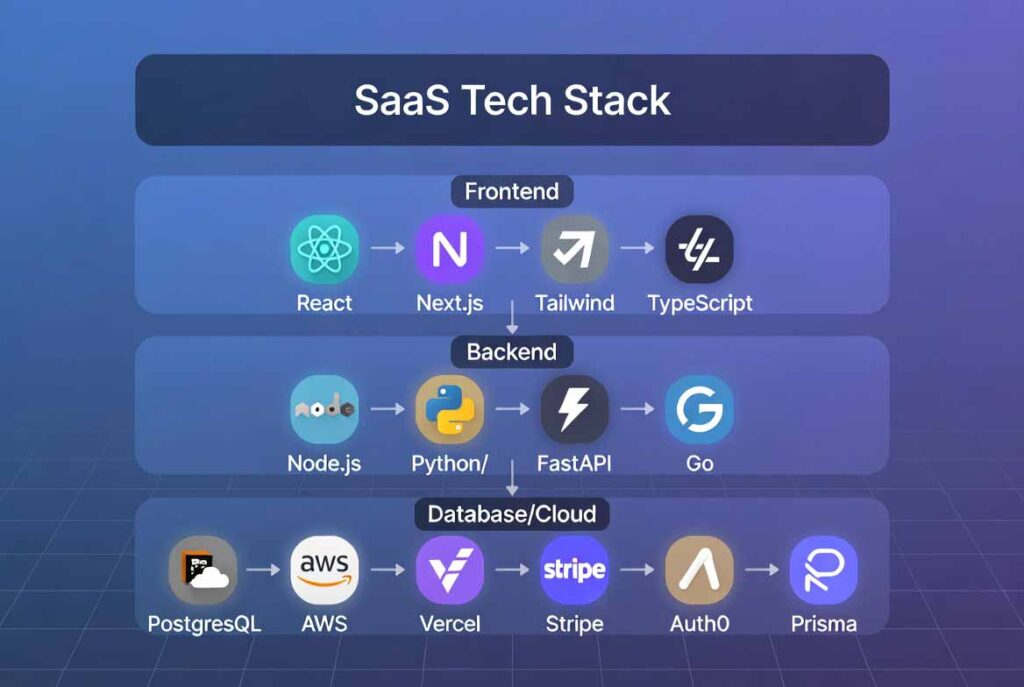
A SaaS tech stack refers to the combination of technologies used to build and run a Software-as-a-Service application. It typically includes:
- Frontend (user interface)
- Backend (server-side logic)
- Database (data storage)
- Hosting (cloud infrastructure)
- DevOps tools (deployment and automation)
Think of it as the backbone of your SaaS product—it supports everything from user interactions to data processing.
Why Choosing the Right Stack Matters
Picking the wrong stack can lead to:
- Slow performance
- High maintenance costs
- Scalability issues
- Security vulnerabilities
On the flip side, the best SaaS tech stack for your product ensures:
- Faster development cycles
- Better user experience
- Easier scalability
- Stronger security
Key Factors to Consider When Selecting a SaaS Tech Stack
Before jumping into technologies, you need clarity on your goals.
Business Requirements
Start with your product vision. Ask yourself:
- What problem does your SaaS solve?
- Who are your users?
- What features are essential?
Your tech stack should align with your business model, not the other way around.
Scalability Needs
If you expect growth (and you should), your stack must handle increasing users and data. Choose technologies that scale horizontally and vertically.
Budget Constraints
Let’s be real—budget matters.
- Open-source tools reduce costs
- Cloud services offer pay-as-you-go pricing
- Managed services can save time but cost more
Balance cost with long-term value.
Development Speed
Speed is crucial, especially for startups. Frameworks that offer reusable components and strong community support can accelerate development.
Frontend Technologies for SaaS
Your frontend is what users see and interact with. It must be fast, responsive, and intuitive.
Popular Frontend Frameworks
Some top choices include:
- React
- Angular
- Vue.js
React vs Angular vs Vue
| Feature | React | Angular | Vue |
|---|---|---|---|
| Learning Curve | Moderate | Steep | Easy |
| Flexibility | High | Moderate | High |
| Performance | High | High | High |
| Community Support | Strong | Strong | Growing |
React is often preferred for flexibility, while Angular suits enterprise-level apps. Vue is great for simplicity.
UI/UX Considerations
A great tech stack isn’t just about code—it’s about experience.
Focus on:
- Mobile responsiveness
- Accessibility
- Fast loading times
Backend Technologies for SaaS
The backend powers your application logic, authentication, and data processing.
Choosing the Right Backend Language
Popular backend options include:
- Node.js
- Python
- Ruby
- Java
Each has its strengths:
- Node.js: Fast and scalable
- Python: Great for AI/ML
- Java: Enterprise-grade stability
Monolithic vs Microservices Architecture
Monolithic Architecture
- Easier to build initially
- Harder to scale later
Microservices Architecture
- Highly scalable
- More complex to manage
For most SaaS startups, starting monolithic and gradually moving to microservices works best.
Database Selection
Your database determines how efficiently your app handles data.
SQL vs NoSQL
| Feature | SQL | NoSQL |
|---|---|---|
| Structure | Structured | Flexible |
| Scalability | Vertical | Horizontal |
| Use Case | Transactions | Big Data |
Choose SQL for structured data and NoSQL for flexibility.
Data Security Considerations
Ensure:
- Encryption (at rest & in transit)
- Regular backups
- Access controls
Cloud Infrastructure & Hosting
Cloud computing is the backbone of modern SaaS.
IaaS vs PaaS vs SaaS
- IaaS: Full control (e.g., servers)
- PaaS: Managed platform
- SaaS: Ready-to-use solutions
Top Cloud Providers
Popular choices include:
- AWS
- Google Cloud
- Microsoft Azure
DevOps & CI/CD Tools
Automation is key to efficiency.
Automation Importance
DevOps helps:
- Reduce errors
- Speed up deployment
- Improve collaboration
Popular DevOps Tools
- Docker
- Kubernetes
- Jenkins
- GitHub Actions
Security & Compliance
Security isn’t optional—it’s mandatory.
Data Protection Standards
Follow best practices like:
- HTTPS encryption
- Multi-factor authentication
- Regular audits
Regulatory Compliance
Depending on your market:
- GDPR
- HIPAA
- SOC 2
Integration & APIs
APIs make your SaaS flexible and powerful.
Importance of APIs
They allow:
- Seamless integrations
- Feature expansion
- Better user experience
Third-Party Integrations
Examples:
- Payment gateways
- Email services
- Analytics tools
Cost Optimization Strategies
Managing costs is essential for sustainability.
Managing Infrastructure Costs
- Use auto-scaling
- Monitor usage
- Optimize storage
Avoiding Vendor Lock-In
Choose tools that allow flexibility and portability.
Common Mistakes to Avoid
- Overengineering early
- Ignoring scalability
- Choosing trends over needs
- Neglecting security
Future-Proofing Your SaaS Tech Stack
Technology evolves quickly. To stay ahead:
- Choose widely supported tools
- Keep architecture modular
- Stay updated with trends
FAQs
1. What is the best SaaS tech stack for startups?
The best SaaS tech stack for your product depends on your needs, but a common stack includes React, Node.js, and AWS.
2. How do I choose between SQL and NoSQL?
Use SQL for structured data and transactions, and NoSQL for scalability and flexibility.
3. Is microservices architecture necessary?
Not always. Start with monolithic architecture and transition as you scale.
4. How important is cloud hosting?
Cloud hosting is essential for scalability, flexibility, and cost efficiency.
5. What are the biggest mistakes in SaaS tech stack selection?
Common mistakes include ignoring scalability, overspending, and choosing technologies without proper evaluation.
6. How often should I update my tech stack?
Review your stack annually or when scaling demands change.
Conclusion
Choosing the best SaaS tech stack for your product is a critical decision that impacts every aspect of your business—from development speed to customer satisfaction. By understanding your needs, evaluating technologies carefully, and planning for the future, you can build a SaaS product that’s not just functional but truly scalable and successful.
Remember, there’s no one-size-fits-all solution. The best stack is the one that aligns perfectly with your goals.